Blurry, Unlabeled, Beloved: How 'This' Became the Internet's Entire Vocabulary in 2026
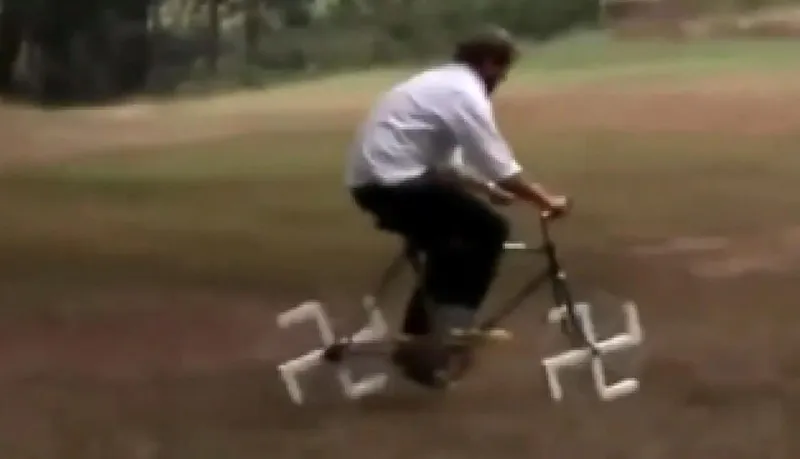
Photo: JelenD5, CC BY-SA 4.0, via Wikimedia Commons
There is a specific kind of post that has quietly taken over the feed. It is a screenshot of something. The something is unclear. It might be a blurry photo of a pigeon at an odd angle, a snippet of a 2007 forum argument, or a rendering of a plastic chair that appears to be screaming. The caption is one word.
this.
That's it. That's the post. It has 400,000 likes.
If you understood it immediately, congratulations, you are fluent. If you stared at it for six seconds and felt your brain slide sideways, also congratulations — that's the intended experience. In 2026, the most popular joke format on the internet is the one that refuses to tell you what the joke is.
A Glitch Walks Into a Group Chat
Call it zero-context humor, or context collapse with a paint job. The rules, as far as anyone can tell, are these: the image should look like it lost a fight with a compression algorithm; the caption should be between zero and four words; and any attempt to explain it out loud must make you sound like you're having a minor medical event.
“I can't explain why it's funny,” said one creator who posts under a handle we're paraphrasing as @moistgravel, because she asked us not to make it findable. “When I try, it becomes unfunny instantly. It's like describing a smell. The description is accurate and also a crime.”
She's not wrong. Try it. Try explaining to a non-online relative why a low-resolution image of a rotating office chair, captioned me after the meeting, is devastating. You will get about halfway through the word “meeting” and watch their eyes go flat.
The Rules of No Rules
Here's the analytical part, which we'll keep brief because this is a humor site and we have a reputation to protect.
Zero-context memes work because they outsource the labor. Older meme formats did the setup for you — the template, the punchline structure, the little dopamine handoff. The new stuff hands you an unlabeled object and says you know what this is. And somehow, collectively, we do. Not intellectually. Vibe-wise.
It's the same reason a well-timed “hm” can end a conversation. Meaning isn't in the words. It's in the shared atmosphere, and the atmosphere is mostly exhaustion.
There's also an in-group mechanic at play, though a gentler one than the old “you had to be there” thing. Nobody is gatekeeping. There's no lore to learn. You can laugh at the plastic chair with zero homework. You just can't explain it to your boss.
Why It Hits Like Pure Brain Candy
Because it asks nothing of you. That's the whole trick. A zero-context meme is the lowest-friction content on earth: no headline to parse, no argument to follow, no 900-word think piece about the state of discourse (hi, hello, we're aware). It is a snack. It is the Cheez-It of the timeline.
And in a feed stuffed with ads disguised as posts and posts disguised as ads, something that openly refuses to mean anything feels almost honest. It's not selling you a wellness routine. It's not building a personal brand. It's a weird JPEG and a one-word caption, and it expects nothing back.
That's the part people miss when they call this stuff brainrot. It's not the absence of thought. It's the absence of demands. And after a decade of being asked to engage, comment, subscribe, and pre-save, an image that wants nothing from you is basically a vacation.
The Creators Speak (Briefly, and Vaguely)
We asked a handful of people who post this stuff why they do it. The answers were, appropriately, low-context.
“It's faster than having a thought,” said one. “I see chair. I feel chair. I post chair.”
Another described their process as “curating a museum where the plaques are missing.” A third sent us a single image — a blurry photo of a parking cone — and no text. We are choosing to interpret that as a statement of intent.
What's interesting is that nobody we spoke to seemed worried about the trend burning out. Context-free humor is self-replenishing. It doesn't depend on a template or a moment. It only needs something slightly wrong-looking and a person willing to say this about it. The supply is infinite. The demand is your group chat at 11:40 p.m.
Your Starter Pack for Being Proudly Confused
If you want in — and you do, don't pretend — here's the curriculum.
Step one: stop looking for the joke. The joke is the looking.
Step two: accept that some posts are meant to be felt, not understood. A low-res photo of a goose near a shopping cart is not a puzzle. It's weather.
Step three: when in doubt, reply with “this” and let the universe sort it out. Nobody will ask you to elaborate. That's the beauty of the format. It's the only genre of communication where being unhelpful is the correct move.
Step four: do not, under any circumstances, send one to your mother with an explanation attached. The explanation is what kills it. Let her be confused. Confusion is a valid emotional response and frankly, a cheaper hobby than scrolling.
The Honest Part
We could wrap this up by declaring zero-context memes the truest language of our age — the purest expression of a culture that has stopped pretending every post needs a point. That would be a nice ending. It's also basically true.
But the simpler truth is this: the internet got loud, then it got algorithmic, then it got exhausting, and somewhere in there we all quietly agreed that a blurry image and one word is enough. Not because we have nothing to say. Because sometimes the most efficient way to say it is to point at something indescribable and grunt.
this.
FSKFSK: we don't know what it means either, and we're at peace with that.